
Aditya-L1, the first space-based Indian observatory to study the Sun, is getting ready for its launch soon, ISRO said on Monday.

The Chandrayaan-2 will conduct the next level of scientific studies on the Moon, writes T E Narasimhan.

The year ended with the launch of the PSLV's 50th mission.

'The lesson Beijing would have learned is that there is, cost-benefit wise, no better option than to keep the Pakistan military supplied with its most advanced armaments, certain that in hostilities with India these would be used for maximum effect.'

Experts said India has possessed the anti-missile technology for several years but needed the political go-ahead to actually test it in live conditions.

The total solar eclipse of 2024 was a historic celestial event because it won't be visible across the contiguous US again until August 2044 and an annular eclipse -- which happens when the Moon can't completely blocks the Sun-- won't appear across this part of the world again until 2046.

The space agency launched 104 satellites, breaking the previous record of 37 by Russia.

The ISRO plans to send three Indians to space by 2022, an announcement made by Prime Minister Narendra Modi during his last Independence Day speech.
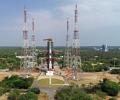
Days after landing on the Moon, India will aim for the Sun on Saturday with its maiden solar expedition, as ISRO's trusted PSLV will carry the Aditya L1 mission on a 125-day voyage to the Sun.
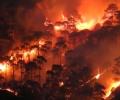
Between April 25 and May 2, India received 38,885 fire alerts.
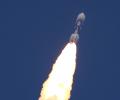
India's first solar mission, if successful, will showcase ISRO's ability to explore the cosmos, explains Kumar Abishek.

The city houses National Remote Sensing Centre and is also home to several companies offer geographical information system services.

The announcement comes two days ahead of the proposed historic launch of the ISRO's 100th satellite along with 30 others in a single mission from Sriharikota.

Shifting the focus to its next space odyssey after successfully placing a lander on the moon's uncharted South Pole region, the Indian Space Research Organisation (ISRO) chief S Somanath on Saturday said that the country's maiden solar mission Aditya-L1 is ready and will be launched in the first week of September.

ISRO will now conduct further testing of VELC and its eventual integration with the Aditya-L1 spacecraft, it said in a release.

ISRO made efforts to re-establish communication with rover Pragyan and lander Vikram after they were put into sleep mode in September following the onset of night on the moon.

Singh also said a final decision on the launch of India's sun mission 'Aditya-L1', scheduled for September 2 at present, will rest on the prevailing cosmic aspects.

The Vikram lander was 100 kilometers away from LRO, near Manzinus crater in the Moon's south pole region, when LRO transmitted laser pulses toward it on December 12 last year.
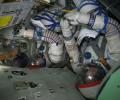
He also said it may be adopted for use in every stage of a rocket. He was speaking at the 16th convocation of SRM Institute of Science and Technology, near Chennai.

According to the space agency, Chandra's Surface Thermophysical Experiment measured the temperature profile of the lunar topsoil around the south pole, to understand the thermal behaviour of the Moon's surface.

Aditya-L1 will be launched by PSLV-C57 rocket on September 2 at 11:50 am. It carries seven payloads to study the Sun, four of which will observe the light from the Sun and the remaining three will measure insitu parameters of the plasma and magnetic fields.

XPoSat or X-ray Polarimeter Satellite is India's first dedicated polarimetry mission to study various dynamics of bright astronomical X-ray sources in extreme conditions.

Humans will work far more collaboratively with artificial intelligence for rapid and complex decision-making.

The Postal Department has geo-tagged more than 1,50,000 post offices on geo-portal Bhuvan, developed by ISRO

In the years to come, India's space assets will play a much bigger role if and when hostilities break out on our borders, says Pallava Bagla.

The record temperatures in May were accompanied by other extreme events, including very heavy precipitation in parts of Europe and the southern US, and widespread and severe coral reef bleaching.
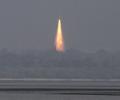
Enthused over its successful launch of GSLV D5 with GSAT-14 communication satellite from Satish Dhawan Space Centre in Sriharikota on Sunday, the Indian Space Research Organisation is planning a series of GSLV launches and an experimental launch of the advanced version GSLV Mark III soon from the spaceport.

The PSInSAR satellite technique used to observe the gradual sinking of Uttarakhand's Joshimath town is a powerful remote sensing tool capable of measuring and monitoring displacements in the Earth's surface over time.

Chandrayaan-3 mission's rover 'Pragyan' has traversed a distance of about eight metres on the lunar surface, and its payloads have been turned on, ISRO said on Friday.
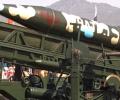
"We estimate that Pakistan now has a nuclear weapons stockpile of approximately 170 warheads. The US Defense Intelligence Agency projected in 1999 that Pakistan would have 60 to 80 warheads by 2020, but several new weapon systems have been fielded and developed since then, which leads us to a higher estimate," the Nuclear Notebook column published in the Bulletin of the Atomic Scientists on September 11 said.

A NASA satellite, orbiting one million miles away, has captured stunning images of the Moon passing the Earth's sunlit side, which show the 'dark side' of the lunar body that is never visible from our planet.
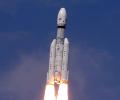
'ISRO takes a very cautious approach.' 'After reaching the moon, the orbit has to be brought down from a single elliptical orbit to a circular orbit while simultaneously ensuring the stability of Chandrayaan 3 and the health parameters of the lander and rover.'

Solar Orbiter is on a unique trajectory that will allow its comprehensive set of instruments to provide humanity with the first-ever images of the Sun's poles, the US space agency said. This trajectory includes 22 close approaches to the Sun, bringing the spacecraft within the orbit of Mercury to study the Sun, and its influence on space, it said.

'When the Americans are talking about colonising Mars by 2030, India cannot be lagging behind.'

ISRO chairman A S Kiran Kumar talks of what's on and what lies ahead for the Indian space agency.
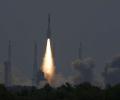
A dome-shaped mysterious object has washed up on a remote Australian beach, amid speculation that it could be from a 20-year-old Indian rocket that was used for launching a satellite.

Deciphering its secrets will unlock the early history of not only our planet, but also of the star system, explains Kumar Abishek.

Billionaires are not only eyeing a profit as they push mankind out into the stars.
It appears India will be among those nations consigned to being among the watchers and not participants of this crucial phase, observes Aakar Patel.

China's National Space Administration landed the Chang'e 4 lunar probe at 10:26 am Beijing time on Thursday, in the South Pole-Aitken Basin which is an impact crater, China Central Television reported.
'Perhaps the government should explain how the same scientific temper, which authored a precise landing for Chandrayaan-3, finds the periodic table and the theory of evolution not good enough for inclusion in the educational curriculum,' asserts Shyam G Menon.
